
How Much Does an Office Fit-Out Cost in Montreal? 2026 Guide
In Montreal, an office fit-out costs $125 to $325 per square foot depending on the building class, according to the Colliers Global Occupier Guide. Furniture comes on top, at $25 to $80 per square foot. An SME fitting out 2,000 square feet in a Class B building should therefore plan for $250,000 to $450,000 in construction.
The final price depends on three variables: the initial condition of the space, the level of finish, and the share of the work the landlord agrees to fund.
This guide is for SME owners, property managers and facilities directors preparing an office move or a commercial lease renewal. Spacia, a commercial general contractor holding RBQ licence 5674-9203-01, breaks down where the money actually goes, line by line.
Cost per Square Foot: Office Fit-Out Cost Ranges in Montreal in 2026
Cost per square foot remains the unit behind every budget estimate.
The Cushman & Wakefield 2026 Office Fit Out Cost Guide puts the average cost in Montreal at $190.28 per square foot, down from $201.17 in the previous edition. That figure covers physical construction only. Colliers publishes ranges by building class that include design and installation:
| Type of space (Colliers, Montreal) | Total cost per square foot | Example for 2,000 sq. ft. |
| Flex or warehouse office | $60 to $150 | $120,000 to $300,000 |
| Class B office | $125 to $225 | $250,000 to $450,000 |
| Class A office | $225 to $325 | $450,000 to $650,000 |
Larger projects cost more. The Turner & Townsend 2025 cost data, drawn from more than 800 Canadian projects, places a medium-quality fit-out in Montreal between $220 and $380 per square foot. CBRE also publishes an annual guide for Montreal, expressed in US dollars.
These ranges cover construction. Furniture, IT infrastructure and the move itself are extra. Spacia’s office fit-out services for businesses price these items separately, so every line of the quote stays easy to read.
Basic, Mid-Range or High-End: What an SME Actually Pays
A basic fit-out keeps some of the existing partitions. It replaces paint, flooring and part of the lighting: this is the low end of the range, often in a flex office or a second-generation space.
Mid-range covers most office fit-out projects in Montreal: new partitions, enclosed meeting rooms, an open-plan area, new ceilings and ventilation adjustments. High-end adds custom finishes, advanced acoustic treatment and premium materials at reception, where brand image matters.
Colliers estimates typical space at 140 to 160 square feet per employee. Applied to Class B ranges, that ratio gives three orders of magnitude for Montreal SMEs:
- Regional office for 6 people (about 900 sq. ft.): $110,000 to $200,000 in construction.
- Professional firm with 10 workstations (1,500 sq. ft.): $190,000 to $340,000.
- Tech company with 25 employees (3,750 sq. ft.): $470,000 to $840,000, cabling included.
Cost Breakdown: Where Every Dollar of Your Leasehold Improvements Goes
A leasehold improvement budget splits into hard costs and soft costs. Hard costs pay for materials, labour and the trades on site. Soft costs cover professional fees, permits and management fees. Colliers details several items per square foot for a Class B office in Montreal (Class A in brackets):
- Partitions: $25 to 40(45 to $80)
- Flooring: $6 to 15(8 to $20)
- Voice, data and AV cabling: $4 to 12(6 to $25)
- Furniture, outside the construction budget: $25 to 70(35 to $80)
Mechanical, electrical, professional fees, the move and a contingency allowance complete the budget breakdown. A free estimate applies these items to your own space.
Hard Costs: Partitions, HVAC, Electrical and Sprinklers
Drywall partitions on metal studs are often the first visible item. Their cost depends mainly on the number of enclosed rooms and the amount of glazing, according to Colliers, along with the soundproofing of each meeting room. Spacia’s in-house interior systems installation team builds these partitions and the suspended ceilings itself, which reduces reliance on subcontractors.
HVAC (heating, ventilation and air conditioning) costs more than most tenants expect. Every new enclosed room needs a fresh air supply, which means more ductwork or an additional rooftop unit. Electrical follows the same logic: workstations, lighting and meeting rooms all need new circuits.
Sprinklers round out the list. As soon as a partition changes the coverage of the sprinkler system, fire safety rules require heads to be moved or added, an expense that budgets often underestimate. Plumbing is a minor item in an office, unless the plan adds a kitchenette or washrooms.
Furniture, IT Infrastructure and Professional Fees
Ergonomic furniture is budgeted separately: $25 to $70 per square foot in Class B, according to Colliers. For 20 employees on 3,000 square feet, that item comes to $75,000 to $210,000.
Chosen well, this furniture supports team productivity for ten years.
IT infrastructure includes structured cabling, Wi-Fi, meeting room displays and video conferencing. Cabling alone costs $4 to $12 per square foot in Class B; active equipment and licences come on top.
Professional fees pay for the plans and specifications. Spacia coordinates partner architects who are members of the OAQ, as well as engineers. According to the Government of Québec, the Engineers Act requires the plans and specifications it covers to be signed and sealed by a member of the Ordre des ingénieurs du Québec.
A project without sealed plans does not get its permit.
Get a Free Estimate for Your Office Fit-Out
A clear read on your budget, with no commitment. Tell us your square footage and move-in date, and Spacia will get back to you with an initial range.
The Factors That Drive the Price of Your Commercial Fit-Out
Two offices of the same size can differ in price by 100%. The gap rarely comes from finishes. It comes from what is hidden behind the walls, from regulatory requirements and from the schedule. The impact of inflation on construction costs has also weighed on materials and labour since 2021.
Shell Space or Base Building: The Initial Condition Changes Everything
A shell space, common in recent Class A buildings as well as in the former workshops of the Mile End, comes with a concrete slab, perimeter walls and services stubbed in for future connection. The tenant pays for everything: mechanical, electrical, ceilings, finishes. A second-generation space keeps reusable partitions and a ventilation system, which brings the bill down.
Before signing, have a contractor walk through the space. A maxed-out electrical panel or a rooftop unit at the end of its life can push a project from the bottom to the top of the range.
Quebec Construction Code, RBQ and Alteration Permits
The Quebec Construction Code (Code de construction du Québec) sets the requirements for accessibility, fire safety and ventilation. The Régie du bâtiment du Québec issues licences: a general contractor is authorized to bid on and carry out the work covered by its subclasses, including subclass 1.3 for buildings of all types. A commercial general contractor also coordinates the CCQ’s labour requirements and CNESST health and safety standards on site.
The alteration permit falls under the City of Montreal and each borough. The Rosemont–La Petite-Patrie borough, for example, announces a wait of 8 to 12 weeks before processing of a file even begins. A certificate of occupancy may also be required before moving in.
Tenant Improvements: How an SME Keeps Its Office Budget Under Control
Cost overruns remain the number one fear of businesses fitting out a space. Two levers prevent them: negotiating the commercial lease before signing, then choosing the project delivery method. The C3 Solutions office renovation shows an SME project carried out within this framework.
Negotiating the Landlord’s Allowance in Your Commercial Lease
The tenant improvement allowance (TIA) is a contribution from the landlord toward the tenant’s leasehold improvements. In Montreal, Colliers places this contribution between $10 and $50 per square foot, depending on the lease terms.
Other formulas exist. The landlord can offer a free-rent period during construction: 2 to 24 months of free rent according to Colliers, depending on the vacancy rate, on typical leases of 5 to 15 years. The cost can also be built into the base rent, in which case the fit-out is amortized over the term of the lease.
Restoration deserves the same attention. A removal clause requires the tenant to take out its specific improvements at the end of the lease, a common obligation in Montreal according to Colliers. Have a contractor price the fit-out before closing the negotiation: the allowance amount is easier to defend with a quote in hand.
Design-Build: A Guaranteed Maximum Budget Before Work Begins
Design-build brings design and construction under a single contractual responsibility. Spacia applies this method with a guaranteed maximum budget in writing, set before work begins. The feasibility study and preconstruction test design choices against the budget, drawing by drawing.
The traditional model reverses the order. Plans first. Bids next. Then change orders on site, which make the price drift. Commercial design-build narrows these gaps, and a client dashboard gives real-time access to the budget and schedule.
What an SME gets with this delivery method:
- a single point of contact responsible for every trade
- a price ceiling known before the first hammer swing
- delivery with no open deficiencies
Talk to a General Contractor About Your Turnkey Project
Spacia takes your project turnkey, from feasibility to handover. Some fifty commercial projects delivered across Greater Montreal.
FAQ: The Average Cost of a Fitted-Out Office Space
SME owners often ask the same questions about the average cost of a fitted-out office. Here are the short answers.
How Much Does It Cost to Fit Out a 2,000-Square-Foot Office?
A 2,000-square-foot office costs $250,000 to $450,000 in construction in a Class B building in Montreal, based on Colliers’ ranges. Add $50,000 to $140,000 in furniture for about 13 workstations. To know your real needs, calculate the square footage your office requires before you start looking for a space.
Is It Cheaper to Fit Out an Office or Rent Coworking Space?
Coworking costs less up front: no major deposit, no furniture, no construction. Over a lease of 5 years or more, a stable team pays off the fit-out, especially with a landlord allowance. The total cost of occupancy settles the question, and the decision to relocate or renovate your offices follows the same logic.
Can Fit-Out Work Be Done in an Occupied Space?
Yes. Work in an occupied space is planned in phases, with noisy work done after hours and construction zones isolated. Spacia’s commercial renovation teams regularly handle this type of site. Phasing extends the schedule. It does, however, avoid shutting down operations.
What Timeline Should You Plan for a Tenant Improvement Project?
Colliers estimates the cycle from construction to move-in at 22 to 40 weeks in Montreal, with about 16 weeks on site for a space under 10,000 square feet. Borough permit timelines come on top of design. Preconstruction can overlap with the permit application to save time.
The earlier the budget is locked in, the less the schedule slips.
Request a Free, No-Obligation Quote for Your Offices
A quick response, an honest assessment, no commitment. Describe your project and come away with a clear read on its feasibility and budget.
Articles similaires
The 8 Best Construction Companies Experienced with Medical Clinic Construction in Greater Montreal (2026)
A clinic is built around its patients. The medical equipment
How Much Does an Office Fit-Out Cost in Montreal? 2026 Guide
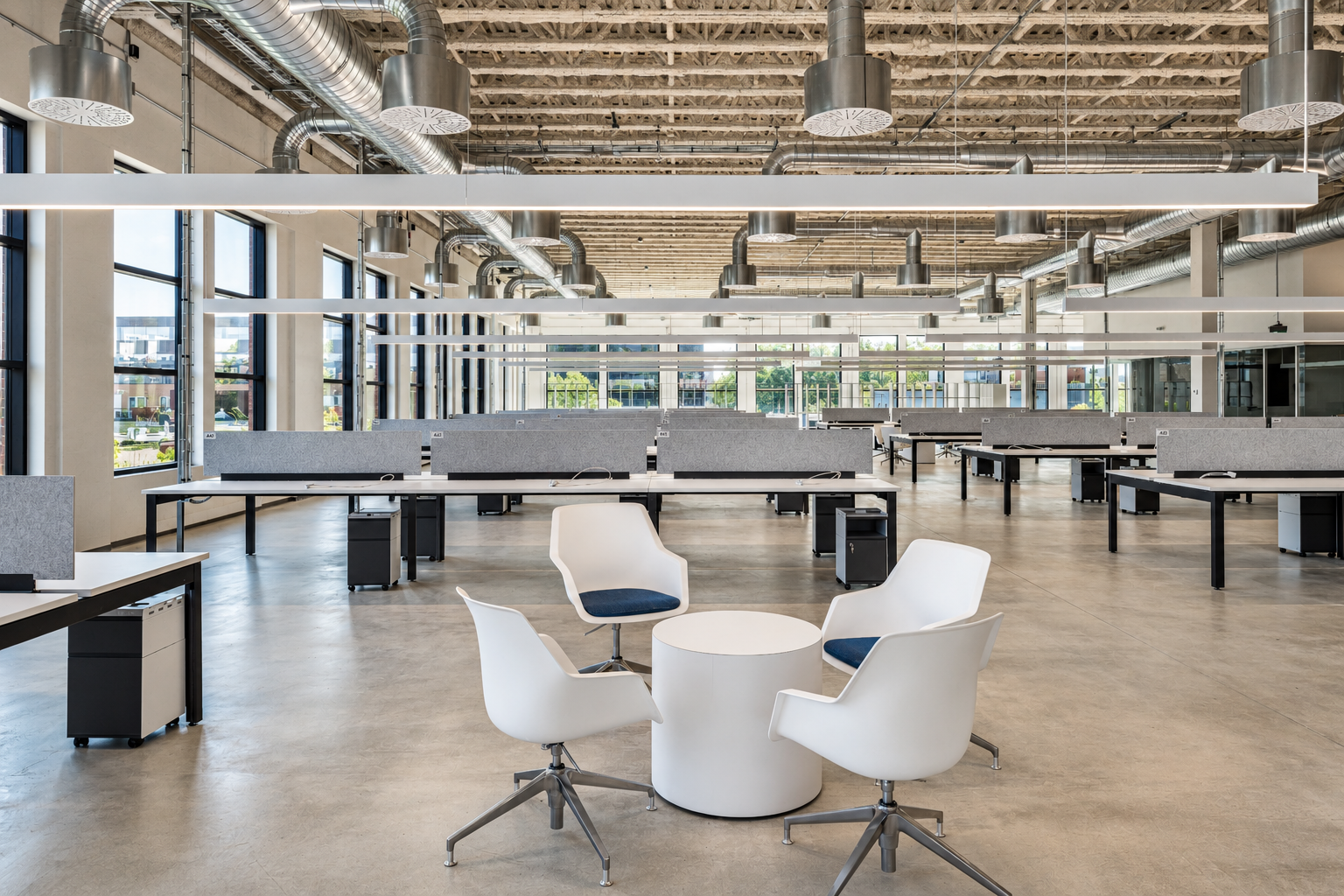
In Montreal, an office fit-out costs $125 to $325 per square
Office Renovation Montreal: 7 Upgrades That Make an Older Office Feel Class AAA in 2027
Montreal’s premium office market is tightening. Discover